
If you grew up in the 90s, chances are you didn’t realise you were living through the end of an era. Nobody announced the last time you’d rent a film from Blockbuster. There wasn’t a national farewell to the Argos catalogue or a minute’s silence for dial-up internet. These things just quietly disappeared while we were busy growing up, leaving us with memories that today’s kids would probably think we’d made up. It’s funny how the things we miss most aren’t always the big moments. They’re the little routines that felt completely ordinary at the time. The Friday night trip to the video shop. Waiting for your holiday photos to be developed. Knocking on your mate’s front door because texting simply wasn’t an option.
Here are the everyday things 90s kids remember that quietly disappeared from British life.
Things 90s Kids Remember: Entertainment
Blockbuster
No list of things 90s kids remember would be complete without Blockbuster. Friday night wasn’t just about watching a film; it was about the ritual of choosing one. Families would spend ages wandering the aisles, picking up every VHS case they walked past before inevitably ending up with the same film they’d rented a month earlier because the latest release had already gone.
Half the excitement came from the anticipation. You hadn’t already watched the trailer six times online, read hundreds of reviews or seen spoilers on social media. You simply picked a film, grabbed a bag of popcorn and hoped for the best. Somehow, even when the choice was terrible, it still felt like a good night.
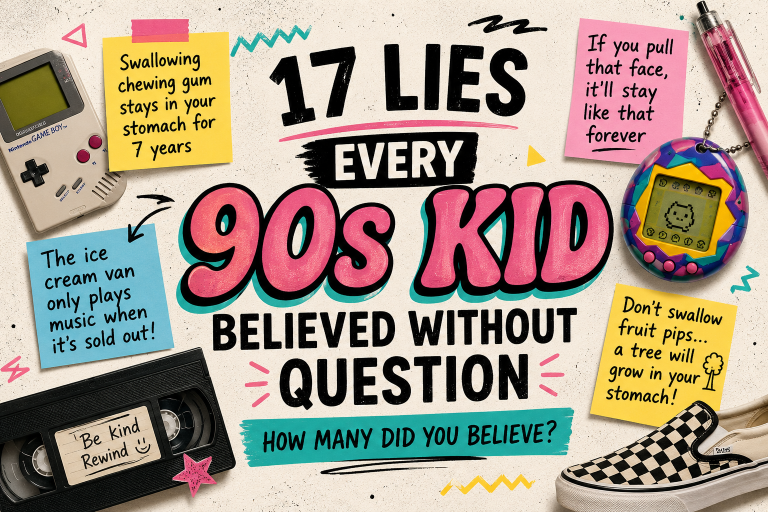
VHS tapes
Streaming has made watching a film almost effortless, but VHS tapes demanded a bit more commitment. First you had to find the tape, then check someone had rewound it before discovering the tracking had decided to ruin the opening ten minutes. Every family seemed to own the same collection too, with Disney classics sitting proudly in giant white plastic cases and at least one Christmas film that mysteriously stayed in the cupboard until December.
Looking back, it’s amazing how much space those tapes took up. Most of us had an entire cabinet dedicated to films we now carry around on a phone.

“Be Kind. Rewind.”
Few stickers have ever held more authority than these three words.
Returning a VHS without rewinding it wasn’t illegal, but it certainly felt like it should have been. The idea of leaving that responsibility for the next person was enough to make you feel mildly ashamed, despite the fact rewinding took about sixty seconds.
It’s one of those little pieces of 90s etiquette that disappeared overnight, and anyone under twenty-five probably has absolutely no idea why it mattered so much.
Recording songs off the radio
Creating the perfect mixtape took patience, timing and a surprising amount of luck. You’d sit beside the cassette recorder with your finger hovering over the Record button, waiting for your favourite song and desperately hoping the DJ wouldn’t start talking over the intro.
Of course, they always did.
Every 90s kid seemed to own at least one cassette where the first ten seconds of a song featured a cheerful radio presenter announcing a competition or giving the weather forecast. It was frustrating at the time, but it’s strangely nostalgic now.
Teletext
Before smartphones put everything in our pocket, Teletext somehow managed to feel revolutionary. It gave us football scores, TV listings, weather forecasts and news updates, provided you had enough patience to wait for the right page to cycle around.
The real test came when someone distracted you just as your page finally appeared. Miss it, and you were waiting another five minutes while trying not to lose your temper. We accepted this as perfectly normal, which says quite a lot about how far technology has come.
Renting PlayStation and Nintendo games
Buying a new game was a big expense, which made renting one for the weekend feel incredibly exciting. You’d head to the video shop, choose your game and spend the next two days trying to complete it before Monday arrived.
Looking back, it was basically the original subscription service. The only difference was that if you didn’t finish the game in time, there wasn’t a handy “download again” button waiting for you.

Printed TV guides
Things 90s kids remember often include sitting with the TV guide and planning the week ahead. Families would buy a magazine or pull the listings out of the newspaper, circling programmes they didn’t want to miss and arguing over who controlled the remote.
There was no catch-up TV if you forgot. If your favourite programme clashed with Coronation Street and your mum got there first, you accepted defeat and waited for the repeat, assuming there even was one.
Video cabinets
Every living room seemed to have one enormous cabinet dedicated entirely to VHS tapes. It usually matched the rest of the furniture, weighed an absolute ton and somehow became home to every film the family had ever owned.
The organisation never lasted long. Within weeks, Jurassic Park would be squeezed between Bambi and Only Fools and Horses, while someone insisted they’d definitely put Mrs Doubtfire back where it belonged.
Disney VHS collections
Owning Disney films felt like a serious achievement. Every birthday or Christmas seemed to add another chunky white VHS case to the collection, until shelves were filled with everything from The Lion King to Beauty and the Beast.
For a while, many of us genuinely believed they’d become valuable collectors’ items one day. Instead, they’re now tucked away in lofts and garages across the country, waiting to surprise someone during a clear-out.
VideoPlus+
Programming a video recorder used to feel unnecessarily complicated. Then VideoPlus+ came along and convinced us we’d entered the future. Instead of typing in dates, times and channels, all you needed was a mysterious number printed beside the programme listing.
It sounds incredibly basic now, but at the time it genuinely felt like clever technology. We were very easily impressed.
Things 90s Kids Remember: Technology
Dial-up internet
Nothing transports you back to the 90s faster than the sound of dial-up internet. Before broadband, connecting to the internet meant sitting through a bizarre sequence of screeches and beeps that sounded less like technology and more like your computer was having a full-blown argument with itself.
The worst part was finally getting online, only for someone to pick up the house phone. The connection would immediately disappear, followed by somebody shouting, “Who was using the internet?!” across the house. Things 90s kids remember don’t get much more iconic than arguing over whether someone wanted to check their emails or make a phone call.
One family computer
There wasn’t a laptop in every bedroom or an iPad on every sofa. Most families had one computer, usually tucked into the dining room or squeezed into the corner of the living room where everyone could see exactly what everyone else was doing.
If your sibling needed it for homework, your game of RollerCoaster Tycoon was over whether you liked it or not. Privacy wasn’t really part of the deal, and there was always somebody standing behind you asking, “How much longer are you going to be?”

Free AOL internet CDs
For a while, it felt impossible to buy a magazine without finding a shiny AOL CD glued to the front. They arrived through the post, appeared in newspapers and somehow multiplied in supermarkets, all promising hundreds of hours of “free internet.”
Most of us ended up with a drawer full of them despite barely using any. Looking back, it’s amazing how much effort companies went to just to get us online.
Floppy disks
Before USB sticks, cloud storage and Google Drive, there were floppy disks. Despite the name, they weren’t particularly floppy by the time most of us used them, but we trusted them with school projects, coursework and anything remotely important.
Looking back, it’s remarkable how little they actually stored. A single phone photo today would probably fill several of them, yet at the time they felt like incredible technology.
Disposable cameras
Every family holiday seemed to start with someone buying a disposable camera. You only had twenty-seven photos, so every click mattered. There were no retakes, no filters and definitely no checking whether everyone had their eyes open.
Getting them developed afterwards was always a gamble. Half the photos would be blurry, one would be of somebody’s shoe and there’d always be a mystery picture that nobody remembered taking. Somehow, those imperfect photos feel far more precious than the thousands sitting on our phones today.
CRT televisions
Flat-screen TVs have made us forget just how enormous televisions used to be. They weren’t something you casually moved from one room to another. They lived on a chunky TV cabinet because they weighed approximately the same as a small family car.
If the picture started playing up, there was always someone convinced giving the side of the television a firm tap would solve the problem. Oddly enough, it often did.

Getting photos developed
Waiting for holiday photos to be developed was part of the excitement. You’d drop the film into Boots, spend the next week wondering how they turned out, then flick through the glossy prints as soon as you got home.
Sometimes they were brilliant. Sometimes you’d discover your thumb had made a guest appearance in every other photo. Either way, there was something special about holding printed memories in your hands instead of endlessly scrolling through them.
Calling 1471
Before missed call notifications, there was 1471.
If you heard the phone ring but didn’t answer in time, you’d pick up the receiver, dial three numbers and wait to hear a robotic voice tell you exactly who had called. It felt incredibly high-tech at the time and somehow became part of everyday life in millions of homes.
Now our phones tell us instantly, but back then, 1471 felt like genuine wizardry.
Dialling 141
Things 90s kids remember definitely include dialling 141 before making a phone call. It was the easiest way to hide your number, whether you were ringing your friend’s house, making a prank call or simply didn’t want anyone knowing it was you.
Most children had absolutely no idea how it worked. We just knew those three numbers somehow made us anonymous, and that was good enough.
The Speaking Clock
If you wanted to know the exact time, you didn’t ask your phone.
You called the Speaking Clock.
Hearing that calm voice announce, “At the third stroke…” felt strangely official, even though every clock in the house was probably close enough. It seems like a completely unnecessary service now, but millions of people genuinely used it.

Answerphones
Before voicemail became something most of us ignored, answerphones were proudly displayed beside the family telephone. If someone wasn’t home, you simply left a message after the beep and trusted they’d ring you back when they got in.
There was no panic if somebody didn’t reply within ten minutes because there was no expectation that everyone should be available every second of the day. Looking back, it seems like a far less stressful way to communicate.
Burning CDs
Long before streaming playlists, we made our own.
Burning a CD took ages, and choosing the track order somehow felt like an important life decision. Then you’d proudly write something like “Absolute Bangers” across the front with a silver marker pen before playing it in your portable CD player until it inevitably started skipping on track seven.
Things 90s Kids Remember: Shopping
The Argos catalogue
Things 90s kids remember don’t get much more nostalgic than the Argos catalogue. Every birthday and Christmas involved sitting on the floor with a biro, circling absolutely everything you wanted before confidently handing the catalogue to your parents as though you’d shown remarkable restraint.
The best bit was when the Christmas edition arrived. It was thicker, shinier and somehow managed to convince every child in Britain they desperately needed at least fifty new toys.
Index
Argos might have been the biggest name, but plenty of families had strong opinions about Index too. The rivalry felt surprisingly serious, especially when one shop had the toy you wanted and the other didn’t.
Every Christmas seemed to involve somebody saying, “Try Index, they might have it in stock,” as though they were revealing highly classified information.
Woolworths
Woolworths somehow managed to sell almost everything. You could buy pick ‘n’ mix, school stationery, batteries, CDs, wrapping paper, footballs and Christmas decorations without ever leaving the shop.
We probably didn’t appreciate it enough while it was around. Its disappearance left a surprising gap on the British high street that never really got filled in quite the same way.
Yellow Pages
Finding a local business used to involve lifting a book heavy enough to double as gym equipment.
The Yellow Pages sat beside the phone in millions of homes, ready to help you find anything from a plumber to a takeaway. Now the thought of searching through hundreds of pages instead of typing a few words into Google feels almost unbelievable.

Pick ‘n’ mix on the scales
Pick ‘n’ mix wasn’t just about choosing sweets; it was about beating the scales.
Every child became an expert at arranging cola bottles, chocolate raisins and jelly snakes to fit together perfectly, convinced they were somehow getting better value for money. You’d carefully build your masterpiece before nervously watching the bag get weighed, hoping it hadn’t crept over the amount your parents had agreed to.
It was basically engineering with sweets, and every one of us thought we’d cracked the system.
Virgin Megastore
Long before Spotify gave us millions of songs in our pockets, buying music meant heading to Virgin Megastore. You could spend hours browsing CDs, listening to albums through the headphones and reading the track lists before deciding whether they were worth your pocket money.
There was something satisfying about walking out with a carrier bag containing one album you’d probably listen to from start to finish. Today, we have access to almost every song ever recorded, yet somehow spend longer deciding what to play.
The Avon and Betterware catalogues
Every few weeks, another catalogue would appear through the letterbox. Avon was full of perfume, make-up and bubble bath, while Betterware somehow convinced every household they urgently needed a sponge holder, a shoe organiser and a gadget nobody had ever asked for.
Most of us only looked through them while waiting for the kettle to boil, yet they somehow ended up in almost every home in Britain.
The Littlewoods catalogue
Long before online shopping, the Littlewoods catalogue lived in kitchens and living rooms across Britain. It wasn’t just somewhere to buy clothes; it was something to flick through for hours, circling trainers, toys and bedroom furniture you knew you probably weren’t getting.
By Christmas, nearly every page had a folded corner or a biro mark next to something you’d quietly added to your wish list.

Buying ringtones
It sounds ridiculous now, but people genuinely paid to make their phones play Crazy Frog or the latest chart hit every time someone called.
The adverts made it look incredibly easy. A quick text message later and suddenly your Nokia was blasting out a polyphonic version of your favourite song. Looking back, spending several pounds on a ringtone feels like one of the worst financial decisions an entire generation collectively made.
Things 90s Kids Remember: Everyday Life
Knocking for your mates
One of the biggest things 90s kids remember is simply turning up at a friend’s house and knocking on the door. There was no texting to ask if they were free, no sharing your location and definitely no checking whether they were active online.
If they weren’t in, you accepted it and went to find someone else. There was no taking it personally because nobody had ignored your message. They simply weren’t home.
Memorising phone numbers
Ask most millennials for the home phone number they had when they were ten, and there’s a good chance they’ll recite it instantly.
Ask them for their partner’s mobile number, though, and they might need to check their contacts.
Back then, memorising phone numbers wasn’t impressive; it was simply something you had to do because you couldn’t rely on your phone remembering them for you.

Going home when the streetlights came on
Parents somehow managed to raise an entire generation with one simple instruction: “Be home when the streetlights come on.”
That was the family tracking system.
We’d disappear for hours on our bikes, build dens, play football in the park and invent games with whoever happened to be outside. Nobody knew exactly where anyone was, yet somehow everyone made it home in time for tea.
Carrying change everywhere
Loose change used to be genuinely useful. You needed it for the payphone, the vending machine, the arcade, the car park or the ice cream van. Every coat pocket, handbag and glovebox seemed to contain a collection of 20p pieces that eventually came in handy.
These days, finding actual coins in your pocket almost feels like discovering buried treasure.
Road atlases
Long before sat navs confidently told us to “turn left in 200 yards”, every family seemed to own a giant road atlas that lived in the glovebox. It was usually held together with sellotape after years of being folded the wrong way, and nobody could ever find the right page without accidentally opening one covering the Scottish Highlands.
Family journeys often involved one person driving while another desperately tried to navigate using the map. It wasn’t unusual to hear, “Hang on… I think we’ve gone past that turning,” followed by complete silence while everyone collectively pretended nobody was to blame.
Printed AA route planners
If you were heading somewhere new, you’d often print directions from the AA Route Planner before leaving the house. Several sheets of A4 paper would sit on the passenger seat with instructions like “Continue for 0.7 miles before bearing slightly left,” which somehow sounded far more complicated than simply following a blue line on a screen.
Miss one turning and the entire journey descended into panic because there wasn’t a calm voice recalculating your route. There was just your dad insisting the directions were wrong and your mum insisting he should have listened ten minutes ago.

Cash in birthday cards
Birthday cards always got opened carefully because you never knew what might fall out.
There was usually one relative who tucked a £10 or £20 note inside with the words, “Don’t spend it all at once,” despite knowing full well it would be gone by the weekend. Even a couple of pound coins felt exciting when they landed on the floor as you opened the envelope.
Bank transfers are practical, but they don’t quite capture the excitement of unexpectedly finding money hidden inside a birthday card.
Writing letters
Before instant messaging, writing a letter was a perfectly normal way to keep in touch. Whether it was a postcard from holiday or a letter to a pen pal, there was something exciting about receiving post with your name on it that wasn’t a bill.
It took days to arrive, sometimes longer, but nobody expected an immediate reply. Looking back, communication was slower, but it also felt far more thoughtful.

Payphones
Red phone boxes weren’t just symbols of Britain; they were part of everyday life. If you missed the bus, needed collecting or wanted to let someone know you’d be late, you found the nearest payphone and hoped you had enough change.
It’s strange to think there was a time when memorising your home phone number wasn’t optional. Without it, that payphone wasn’t much use to anyone.
Calling after 6pm because it was cheaper
Younger readers will never understand why parents would refuse to let you make a phone call until the evening.
Phone tariffs often meant calls became much cheaper after a certain time, so anything that wasn’t urgent could wait until after tea. Entire conversations were delayed simply to save a few pounds, and everyone accepted that as completely normal.
Things Us 90s Kids Took for Granted
Encyclopaedias
Homework looked very different before Google. Every house seemed to have a collection of encyclopaedias lined up on a bookshelf, ready to answer whatever bizarre topic your teacher had decided to set that week.
Research meant flicking through hundreds of pages and hoping the information you needed was actually there. If it wasn’t, there wasn’t another tab to open. You either made do or convinced yourself your teacher probably wouldn’t notice.
Newspaper TV listings
Even if you didn’t buy a TV magazine, the newspaper usually included a page listing everything that was on television that evening. It was one of those little routines that seemed completely ordinary at the time.
Someone in the house would always end up claiming the paper first, leaving everyone else waiting impatiently just to find out what time Gladiators started.
Free carrier bags
Once upon a time, nobody thought twice about carrier bags. Every shopping trip ended with another handful coming home, and most kitchens had one giant bag filled with hundreds of other bags waiting to be reused “one day.”
These days we remember to take reusable bags with us, but there’s something oddly nostalgic about opening the cupboard and watching an avalanche of plastic bags tumble onto the floor.
Smoking sections
It’s difficult to believe now, but smoking sections in restaurants, cafés and pubs were once considered a perfectly reasonable compromise.
Looking back, the idea that smoke politely stayed on one side of the room feels slightly ridiculous. It was one of those things everyone accepted without really questioning until attitudes changed remarkably quickly.
Paper cinema tickets
Going to the cinema meant queuing at the ticket desk before being handed a little printed ticket that inevitably disappeared into someone’s pocket.
There were no QR codes, digital wallets or mobile apps. Just a tiny slip of paper that somehow survived long enough to be checked before disappearing forever.

Library stamp cards
Before libraries switched to computer systems, borrowing a book meant watching the librarian carefully stamp a date inside the front cover.
There was always a quiet sense of panic when you realised the return date had been and gone, followed by a frantic search under your bed because you were convinced the book had vanished.
Scholastic book clubs
Things 90s kids remember almost always include those colourful Scholastic order forms arriving at school. Suddenly everyone became desperate for books, mainly because there was a free pencil, poster or glow-in-the-dark bookmark involved.
Taking the leaflet home and persuading your parents to let you order something felt like a monthly event, even if you spent longer choosing than you did actually reading the book.
Film canisters
Every family seemed to have a drawer full of little black film canisters, each one containing photos from a holiday or birthday that hadn’t been developed yet.
There was no helpful label telling you what was inside. You simply hoped it wasn’t another roll of blurry pictures from Butlin’s in 1994.
Being completely uncontactable
Perhaps the biggest thing that disappeared wasn’t an object at all.
Once you left the house, that was it. Nobody knew where you were, nobody expected an instant reply and there was no pressure to constantly check your phone. If someone wanted you, they waited until you got home.
It’s probably one of the biggest reasons so many people look back on the 90s so fondly. Life wasn’t necessarily easier, but it did feel like you were allowed to disappear for a few hours without the world falling apart.
We didn’t know we were making memories
That’s the funny thing about growing up. None of these moments felt historic while we were living them.
We didn’t know our last trip to Blockbuster would be our last. We never imagined the Argos catalogue would disappear, or that we’d one day have to explain to our children what a payphone was.
The everyday things are often the ones that stay with us the longest. Maybe that’s why they’re the first things we remember whenever someone mentions the 90s.
Jump to our post about 90s kids bedrooms!
What would you add?
We’ve covered some of the biggest things 90s kids remember, but there’s no chance we’ve remembered everything. What everyday thing from the 90s do you still miss, and what disappeared so quietly that you barely noticed it had gone?
Let us know in the comments – we’d love to hear the memories that instantly take you back.